
Houston proudly calls itself the Bayou City.
It’s on t-shirts, tourism materials, and civic branding. We celebrate Buffalo Bayou Park, run and bike along bayou trails, and use the waterways as landmarks when giving directions. But for a city defined by bayous, we spend surprisingly little time appreciating them.
For much of the twentieth century, Houston viewed its bayous primarily as drainage infrastructure. Their purpose was to move water away from homes, businesses, and streets as quickly as possible. As the region grew, many waterways were straightened, widened, deepened, and in many cases lined with concrete to improve flood conveyance.


Those decisions reflected the priorities and engineering knowledge of their time. Flood protection mattered, and continues to matter. But something was lost along the way.


How Houston forgot its bayous — and started to remember them
In 1913, landscape architect Arthur Comey told Houston that its bayous were the backbone of a future park system. It took a world war, a depression, another world war, and the Federal Highway Act to bury that idea under concrete and asphalt. It took the Buffalo Bayou Partnership, $220 million in public and private investment, and 29 years to begin bringing it back. White Oak Bayou is next.
More than a century ago, landscape architect Arthur Comey imagined Houston’s bayous as the backbone of a regional park system. Rather than separating the city from its waterways, his vision connected neighborhoods, parks, and public spaces through them.
In many places, we chose a different path. Development often turned its back on the bayous. Back fences faced the water. Roads crossed over them. Entire generations of Houstonians grew up thinking of bayous as drainage ditches rather than ecosystems.
Fortunately, not everyone accepted that future.
One of the most influential voices was Terry Hershey, whose advocacy helped prevent Buffalo Bayou from becoming a fully channelized flood-control corridor. Her efforts preserved one of Houston’s most important natural landscapes and demonstrated that environmental stewardship and flood management did not have to be mutually exclusive.
Today, our understanding of stormwater management has evolved significantly.
We now recognize that moving water away as quickly as possible is not always the best strategy. Rain gardens, bioswales, detention basins, restored wetlands, permeable surfaces, and other forms of green infrastructure can slow, store, and filter stormwater before it reaches our bayous. Parks can double as flood infrastructure. Natural systems can improve resilience while creating public amenities.
We’ve also gained a greater appreciation for the ecological value of urban waterways.
Healthy bayous support birds, fish, turtles, pollinators, and countless other species. They improve water quality, provide habitat, and offer opportunities for people to experience nature in the middle of a major metropolitan area.
The question is whether we’re willing to apply those lessons more broadly.
In 2017, the Memorial Heights Redevelopment Authority funded a study exploring alternatives to replacing aging concrete lining along a section of White Oak Bayou north of downtown. Rather than automatically rebuilding the concrete channel, the study examined what restoration might look like.
Researchers found opportunities to remove concrete, expand habitat, create additional recreational space, improve water quality, and even add regional stormwater detention while maintaining flood protection. More ambitious concepts envisioned dozens of acres of restored habitat and hundreds of acre-feet of stormwater storage.
The study has not advanced into a funded project. Restoration would require significant investment, engineering, and public support. When aging concrete channels reach the end of their useful life, should our default response be to replace them exactly as they were? Or should we consider whether there are better options?
Rewilding portions of Houston’s bayous would not be easy. In many locations it would require reshaping channels, restoring more natural banks, creating floodplain features, and balancing ecological goals with flood-management requirements.
Yet the benefits could be substantial. Naturalized waterways can reduce long-term maintenance costs. They can improve habitat and water quality. They can create new opportunities for recreation. They can increase nearby property values. Most importantly, they can reconnect people with the landscapes that make Houston unique.
For a city with thousands of miles of bayous, we still don’t take our bayous seriously enough.

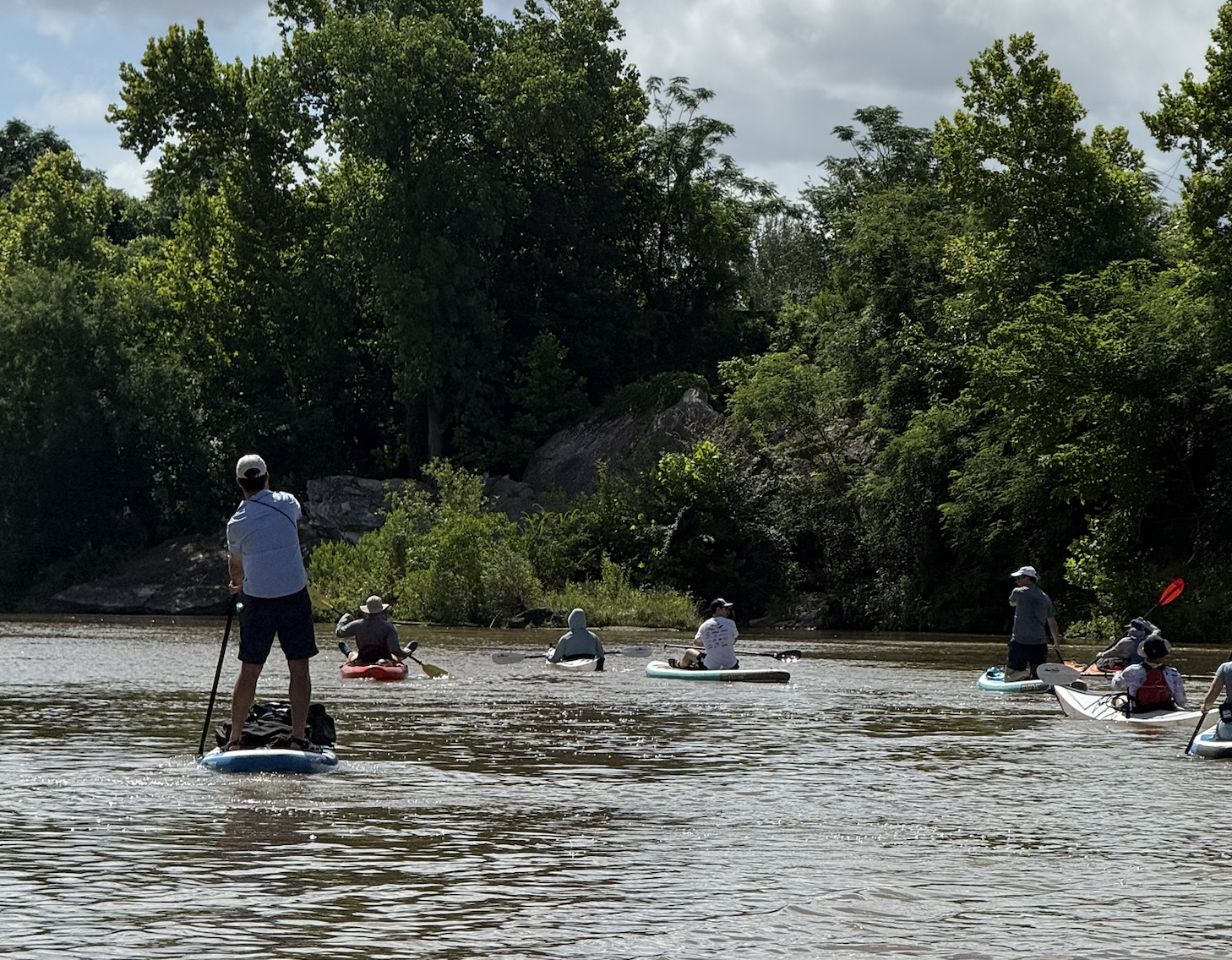
Our bayous offer a side of Houston hidden from ground level. One minute you’re surrounded by nature, the next, you’re drifting beneath gigantic highways with unique views of Downtown.
Join Bayou enthusiasts with an eye opening perspective of Houston from the water.
We talk endlessly about roads, freeways, and development projects. We debate parks, housing, and transportation. But our waterways often remain an afterthought despite being among the defining features of the region.
The future of Houston will always be shaped by water.
The question is whether we continue to treat bayous solely as infrastructure—or whether we begin to see them as assets worthy of restoration, stewardship, and admiration.
It’s time to start acting like a Bayou City.


Leave a Reply