
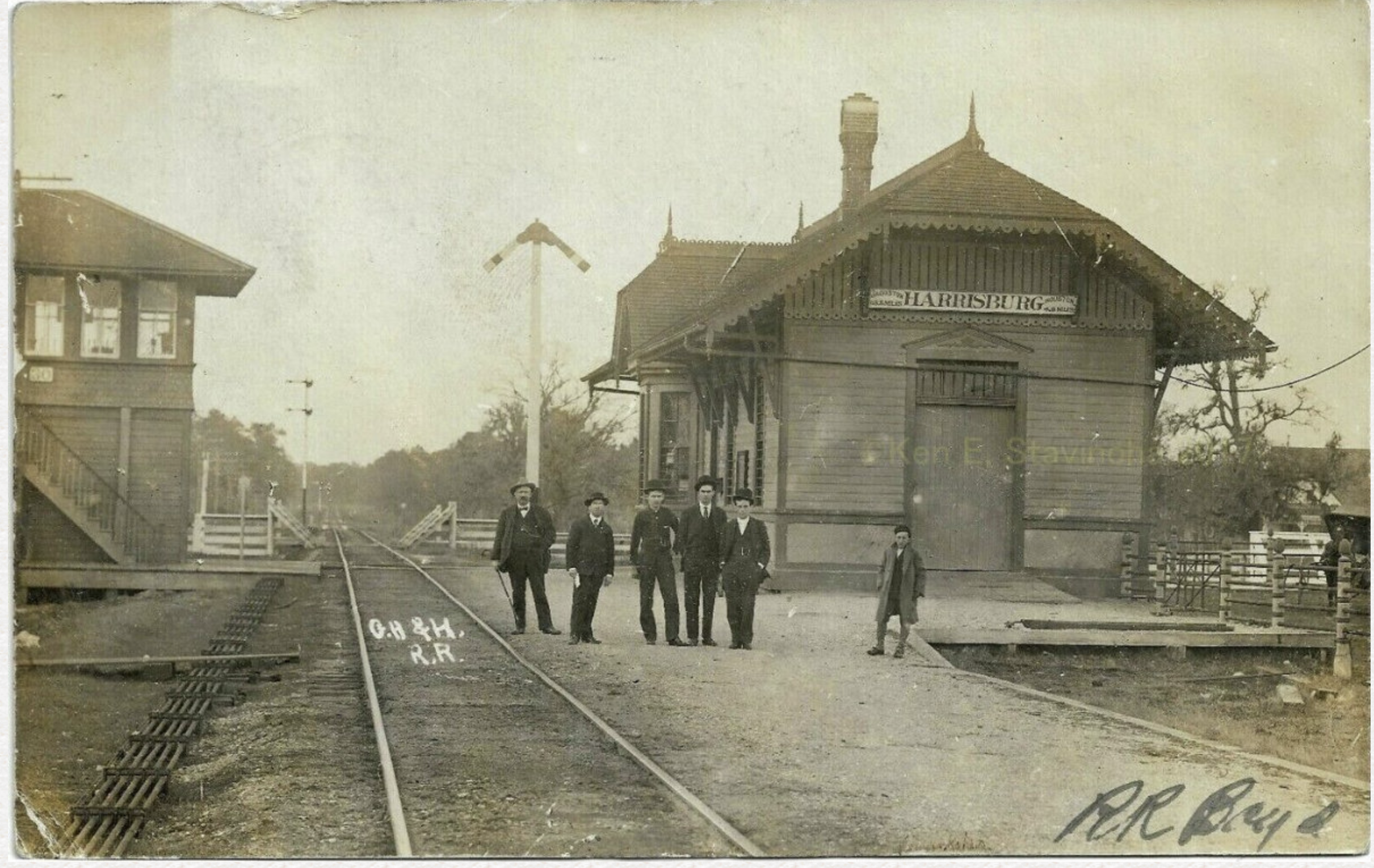
Harris County, Texas, derives its name from John Richardson Harris, an early settler who established a trading post and sawmill in the region along Buffalo Bayou. His settlement was surveyed in 1826 as Harrisburg and became a focal point for early commerce and local government in the period when Texas was still under Mexican rule.
In March 1836, as the forces of Antonio López de Santa Anna advanced, President David G. Burnet designated Harrisburg as the temporary capital of the Republic of Texas. However, Harrisburg’s tenure as capital was short: by April 15, 1836, Burnet and his cabinet boarded a steamboat at Harrisburg to escape advancing troops, and the capital function was soon transferred to Velasco.
Over time, the newly founded City of Houston grew around it and eclipsed Harrisburg in importance. In 1839, the name of Harrisburg County was officially changed to Harris County as the region’s governance evolved. Today, Harrisburg survives only as a neighborhood in Houston’s East End, while Harris County has grown into the most populous county in Texas, with Houston serving as its county seat.
Commissioners Court: The County’s Power Center
The heart of Harris County government is its Commissioners Court, a five-member body made up of the four precinct commissioners and the County Judge. While the title “County Judge” suggests judicial authority, in modern Texas counties the role is largely administrative and political, more akin to a county executive.
For decades, Ed Emmett served as County Judge (2007–2019), earning a reputation as a pragmatic Republican leader. He steered the county through hurricanes and growth, and in his farewell remarks warned against past planning mistakes, including the failure to convert the abandoned Katy rail line to commuter rail:
“We cannot go back in time and undo some poor decisions, but we can learn from those decisions. One of the most glaring mistakes was the failure to convert the abandoned Katy rail line to commuter rail.” — Ed Emmett
In 2018, Lina Hidalgo, a 27-year-old Democrat and political newcomer, unseated Emmett in one of the county’s most surprising elections. She soon found herself presiding over the county’s response to the COVID-19 pandemic, which catapulted her and the office into national attention. Hidalgo’s leadership style and visibility marked a sharp contrast to her predecessor, underscoring how dynamic and high-profile the County Judge role had become.
Unlike the County Judge, who does not directly control a budget, each Harris County Commissioner wields an annual budget exceeding half a billion dollars, making these seats some of the most powerful positions in Texas local government. Commissioners oversee a wide range of services: road and bridge maintenance, law enforcement support, flood control projects, public health investments, and expansive parks and trail systems.
Their projects span from the Spring Creek Greenway, the longest connected urban forested corridor in the United States, to mega-infrastructure like the $1-billion+ Ship Channel Bridge, funded entirely by toll revenues through HCTRA (not general taxpayer dollars). Commissioners have also overseen the preservation of iconic landmarks like the Astrodome, once dubbed the “Eighth Wonder of the World.”
As Harris County continues to grow, now larger in population than many U.S. states, the Commissioners Court faces the challenge of not just maintaining but building world-class infrastructure that connects communities, enhances resilience, and improves everyday life for residents.
Harris County Precinct 1

Commissioner Rodney Ellis represents Harris County Precinct 1, which encompasses some of the county’s most historic and diverse neighborhoods inside the loop: the Heights, Montrose, Rice University, Third Ward, Bellaire, Fifth Ward, Kashmere Gardens, and Downtown Houston.

First elected to Commissioners Court in 2016 after decades in the Texas Senate, Ellis has built a reputation as a progressive voice on issues ranging from criminal justice reform to flood control and equitable infrastructure investment. His precinct includes a dense mix of cultural districts, universities, and historically underserved neighborhoods, giving his office a mandate that blends economic opportunity with social equity.
Precinct 1 describes its mission as becoming a national model for responsive public service advancing inclusive, innovative, and collaborative approaches to improve quality of life, expand equality of opportunity, and ensure the fair treatment of all people in Harris County. This vision manifests in programs that emphasize affordable housing, mobility projects, parks and trails, and investment in historically neglected communities.
Ellis has also been a leading voice on Commissioners Court for rethinking Harris County’s infrastructure priorities — ensuring that as the county grows, public dollars support world-class projects that both serve residents and strengthen resilience against flooding and climate risks.

Harris County Precinct 2

Commissioner Adrian Garcia represents Precinct 2, which stretches across Houston’s Northside, the East End, portions of the historic Fifth Ward, and extends south along the Gulf Freeway to South Houston and Clear Lake. This diverse footprint includes some of Harris County’s most vibrant cultural communities, industrial corridors, and growing suburban areas.

Garcia, a lifelong Houstonian and former Harris County Sheriff and Houston City Councilmember, was elected to Commissioners Court in 2018 and took office in 2019. Since then, he has made it his mission to transform Precinct 2 into a premier place to live, work, and play. His signature initiative, Revive2Thrive, is a comprehensive community revitalization program focused on upgrading infrastructure, expanding economic opportunities, and providing stronger support services for residents.
Through Revive2Thrive, Garcia emphasizes a bottom-up approach: engaging, educating, and empowering communities to guide investments and shape improvements in their neighborhoods. This participatory model is central to his vision of making government more responsive and accessible, ensuring that residents are not just recipients of county services but active partners in Precinct 2’s transformation.
From bolstering workforce training programs to expanding parks and mobility infrastructure, Garcia’s tenure underscores a commitment to leveraging county resources for inclusive growth. His leadership reflects both the challenges and opportunities of a precinct that embodies Harris County’s diversity — industrial, residential, and coastal — and its central role in the county’s future.

Harris County Precinct 3

Commissioner Tom Ramsey, P.E. represents Precinct 3, which under the new redistricting map stretches across a vast area of unincorporated Harris County — from Cypress in the west to Crosby in the east, and from Huffman and Tomball in the north to the Memorial Villages inside the Loop.

Precinct 3 is the most geographically expansive district, encompassing approximately 47% of all unincorporated Harris County. Ramsey’s office oversees an enormous scope of responsibilities: more than 6,750 lane miles of roadway, 69 parks, 10 community and nature centers, and 9 hike-and-bike trails. Among these is the Spring Creek Greenway, a nationally recognized project that forms the longest connected urban forested corridor in the country, linking parks and preserved lands along Spring Creek for miles.
The precinct is also home to, and works in partnership with, 14 school districts, 11 cities, 203 municipal utility districts, and nearly 1,000 neighborhoods. This scale makes Precinct 3 a linchpin in shaping mobility, flood resilience, and quality-of-life improvements across a large and fast-growing part of Harris County.
A professional engineer by training, Ramsey has emphasized infrastructure stewardship, public safety, and conservative fiscal management since joining Commissioners Court. His technical background informs his approach to large-scale projects and long-term county planning.

Harris County Precinct 4

Commissioner Lesley Briones represents Precinct 4, which covers a diverse stretch of Harris County, including Timbergrove and Lazybrook, River Oaks, Uptown, Gulfton, Afton Oaks, parts of Spring Branch, Memorial Drive, and extending westward to the edge of Katy.

Briones, an attorney, former nonprofit leader, and former Harris County civil court judge, was elected to Commissioners Court in 2022. She is the first Latina to serve as Precinct 4 Commissioner, bringing with her a mission “to advance opportunity and justice” across one of the county’s fastest-growing and most economically varied areas.
Her office oversees essential county services in Precinct 4, with a focus on infrastructure, mobility, and community development. Key initiatives include expanding sidewalk connectivity and ensuring safer routes for pedestrians, enhancing public transit access, and fostering equitable economic development. Briones also launched People 4 Places, a campaign to highlight and invest in the neighborhoods, parks, and cultural assets that define her district.
Precinct 4 is uniquely positioned at the intersection of Houston’s historic neighborhoods and its suburban growth corridor. Briones’ leadership reflects that balance: investing in high-opportunity areas like Uptown and River Oaks while ensuring resources also flow to working-class communities such as Gulfton and Spring Branch.

Harris County Elected Positions
County Attorney The Harris County Attorney, currently Christian D. Menefee, serves as the chief civil lawyer for the county. Unlike the District Attorney, who prosecutes criminal cases, the County Attorney represents the county in lawsuits, provides legal advice to county officials, and often plays a pivotal role in high-stakes policy disputes. In recent years, the office has been especially visible in litigation against state-level policies affecting voting rights, environmental protections, and public health.
Sheriff’s Office The Harris County Sheriff, Ed Gonzalez, leads the largest sheriff’s office in Texas, overseeing patrols in unincorporated areas, jail operations, and law enforcement coordination across the county. With Harris County’s size and population, the Sheriff’s Office is a major law enforcement agency in its own right — larger than many state police forces. The sheriff is one of the most recognizable county officials, often at the center of public safety debates, jail reform, and high-profile investigations.
Constables, Precincts 1-8 Harris County’s eight elected constables are unique to Texas’ system of local government. Each constable leads a law enforcement agency within their precinct, with deputies who perform patrol duties, serve warrants, and provide civil process services. In practice, constables often act as localized community policing agencies — with significant influence on traffic enforcement, truancy prevention, and neighborhood security. With more than 3,000 deputies countywide, Harris County’s constables collectively form one of the largest law enforcement presences in the region, making their offices highly visible and politically powerful.
Other Elected Offices and Their Functions
While the County Attorney, Sheriff, and Constables often command the most attention, Harris County voters also elect officials across the justice system and county administration. Here’s a quick guide to who they are and what they do.
District Attorney: Prosecutes criminal cases on behalf of the state. In Harris County, this office is currently led by Sean Teare, who directs policy on issues ranging from violent crime to diversion programs.
District Clerk: Maintains records for the county’s district courts, including civil, criminal, and family cases. The office, led by Marilyn Burgess, is critical for ensuring transparency and public access to court documents.
County Courts at Law / District Courts: Harris County’s elected judges preside over civil, criminal, family, and juvenile cases. Together, they make up one of the largest local trial court systems in the United States.
Justices of the Peace: These judges handle small claims, evictions, and minor criminal cases. Often referred to as “the people’s courts,” they are the entry point to the justice system for many residents.
Probate Courts: Specialized courts that handle wills, estates, guardianships, and mental health commitments. Judges here often deal with some of the most sensitive family issues in the county.
Courts of Appeals: Harris County is served by the First and Fourteenth Courts of Appeals, which review decisions from trial courts in a 10-county region, including Harris.
County Clerk: Oversees vital records (like marriage licenses and birth certificates), manages county elections, and maintains Commissioners Court records. Currently led by Teneshia Hudspeth.
Tax Assessor-Collector: Manages property tax collection and voter registration — a powerful combination in Texas politics. The office is currently held by Annette Ramirez.
County Treasurer: Acts as the county’s banker, safeguarding and disbursing funds. In Harris County, the Treasurer is Carla Wyatt.
This article is provided by A Tale of Two Bridges as a civic education resource. Our goal is to help residents better understand the history of Harris County and the roles of its elected officials. This content is strictly nonpartisan and does not endorse or oppose any candidate or political party.


Leave a Reply